
Top articles
- Wear-Resistant Ceramic Tiles: Industrial Wear Protection Solution
- New Benchmark in Impact Resistance and Wear Protection:Three-in-One Ceramic Vulcanized Liners
- Wear-Resistant Ceramic Liners for Cyclone Separators
- What is a wear-resistant ceramic composite pipe?
- Performance Advantages and Application Fields of Alumina Ceramic Tubes
- Wear-Resistant Alumina Ceramic Liner Plate: Technical Specifications and Application Overview
- Wear-Resistant Alumina Hexagonal Ceramic Liner Tiles: A Reliable Choice for Industrial Wear Protection
- Wear-Resistant Alumina Ceramic Lining Bricks: A High-hardness, Long-Life Grinding Solution
- Alumina Ceramic Grinding Balls: High-Purity, Wear-Resistant Grinding Media
- Visit Us at UGOL ROSSII & MINING 2026 – Booth 1-D22
Latest articles
- Wear-Resistant Ceramic Tiles: Industrial Wear Protection Solution
- New Benchmark in Impact Resistance and Wear Protection:Three-in-One Ceramic Vulcanized Liners
- Wear-Resistant Ceramic Liners for Cyclone Separators
- What is a wear-resistant ceramic composite pipe?
- Performance Advantages and Application Fields of Alumina Ceramic Tubes
- Wear-Resistant Alumina Ceramic Liner Plate: Technical Specifications and Application Overview
- Wear-Resistant Alumina Hexagonal Ceramic Liner Tiles: A Reliable Choice for Industrial Wear Protection
- Wear-Resistant Alumina Ceramic Lining Bricks: A High-hardness, Long-Life Grinding Solution
- Alumina Ceramic Grinding Balls: High-Purity, Wear-Resistant Grinding Media
- Visit Us at UGOL ROSSII & MINING 2026 – Booth 1-D22
Your browsing history

The main application of wear-resistant alumina ceramic sheets
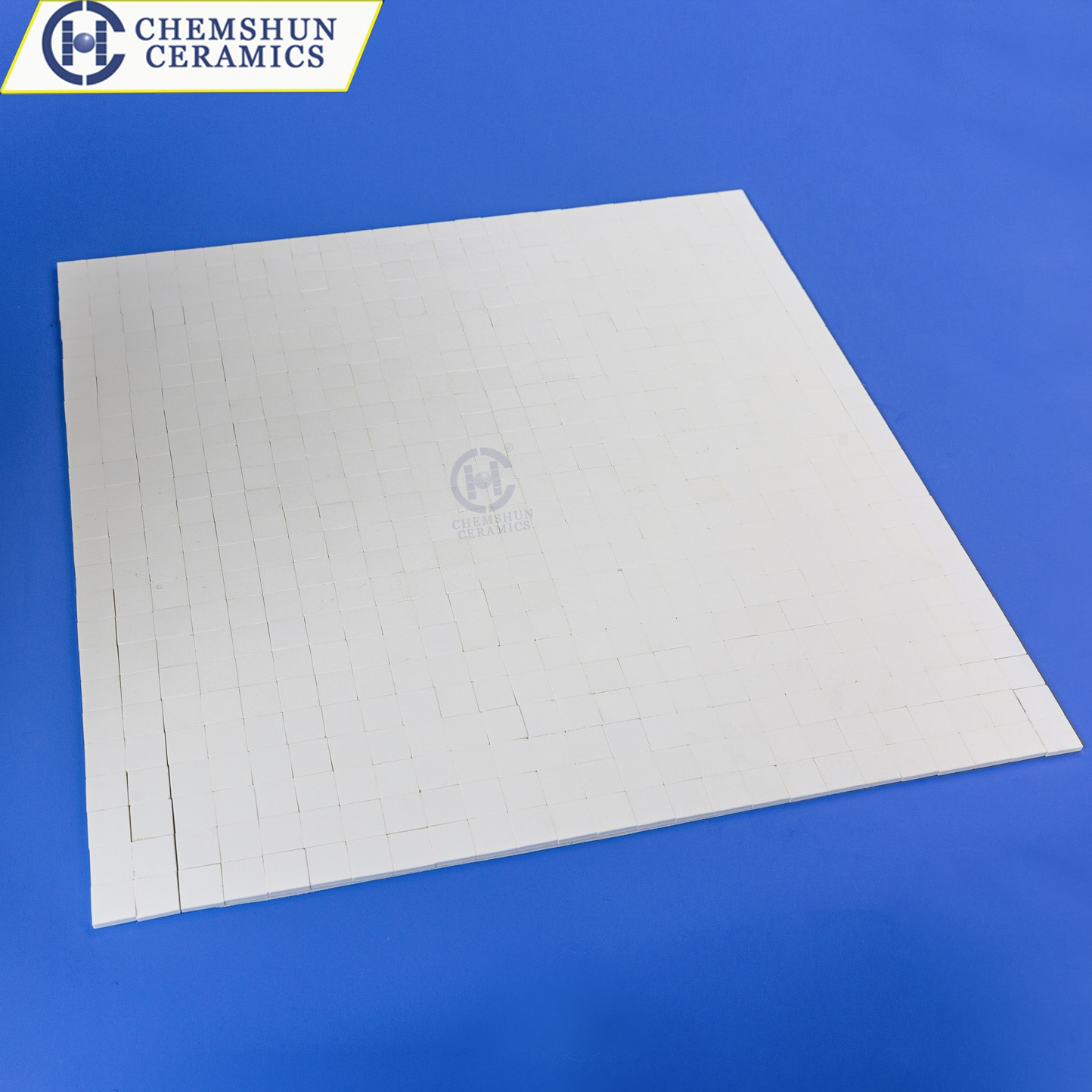
The wear-resistant alumina ceramic sheet is an inorganic non-metallic material made from α-alumina powder through high-temperature sintering. Its alumina content usually ranges from 92% to 99.7%, and it can be optimized by adding a small amount of oxides (such as silicon dioxide, magnesium oxide, etc.) to improve the microstructure. This material is formed by dry pressing, isostatic pressing or injection molding and then sintered at a temperature above 1600°C, featuring high density and low porosity.
The main performance characteristics of alumina ceramics are reflected in their physical and chemical properties. Its hardness can reach the 9th Mohs scale, second only to diamond and silicon carbide, demonstrating extremely high wear resistance; its compressive strength at room temperature exceeds 2000 MPa, but its toughness is relatively low, with the fracture toughness typically ranging from 3 to 4 MPa·m¹/². In terms of chemical properties, alumina ceramics have stable inertness, are resistant to acid and alkali corrosion (except for hydrofluoric acid and hot concentrated alkali), and can work in high-temperature oxidative environments for a long time, with a maximum operating temperature of up to 1600°C. Additionally, it has a high volume resistivity, a dielectric strength greater than 10 kV/mm, and combines excellent electrical insulation properties.
Machinable ceramic plates are mainly used for wear protection in parts such as coal powder conveying pipelines, exhaust fan volutes and impellers. They are particularly widely applied in magnetic separation machine cylinders, mineral slurry conveying pipelines, chutes, and other equipment. The service life of these equipment with machinable ceramic plates has been significantly increased by several times. Through their outstanding wear resistance and good corrosion resistance, machinable ceramic plates provide a reliable solution for the long-term stable operation of industrial equipment under harsh conditions, significantly reducing maintenance costs and improving production efficiency.