
Top articles
- The Hidden Causes of Failure in Alumina Ceramic Wear Parts
- Alumina Ceramic Grinding Balls: Technical Properties and Applications of High-Purity Grinding Media
- Alumina Ceramic Wear Liners: Technical Selection and Application for Industrial Wear Protection
- Wear-Resistant Ceramic Tiles for Agitator Tank Protection
- High-Quality Alumina Ceramic Manufacturing Process: From Powder to Finished Product
- Design of Alumina Ceramic Liner Installation Structures and Key Technical Points for Failure Prevention
- Alumina Wear-Resistant Ceramics: The Hardcore Armor of Industry
- Impact Resistance of Ceramic Rubber Vulcanized Plates: An In-Depth Analysis
- What Is Alumina Ceramic and Why Is It the Preferred Wear-Resistant Material for Industry?
- Wear-Resistant Ceramic Tiles: Industrial Wear Protection Solution
Latest articles
- The Hidden Causes of Failure in Alumina Ceramic Wear Parts
- Alumina Ceramic Grinding Balls: Technical Properties and Applications of High-Purity Grinding Media
- Alumina Ceramic Wear Liners: Technical Selection and Application for Industrial Wear Protection
- Wear-Resistant Ceramic Tiles for Agitator Tank Protection
- High-Quality Alumina Ceramic Manufacturing Process: From Powder to Finished Product
- Design of Alumina Ceramic Liner Installation Structures and Key Technical Points for Failure Prevention
- Alumina Wear-Resistant Ceramics: The Hardcore Armor of Industry
- Impact Resistance of Ceramic Rubber Vulcanized Plates: An In-Depth Analysis
- What Is Alumina Ceramic and Why Is It the Preferred Wear-Resistant Material for Industry?
- Wear-Resistant Ceramic Tiles: Industrial Wear Protection Solution
Your browsing history

The Hidden Causes of Failure in Alumina Ceramic Wear Parts
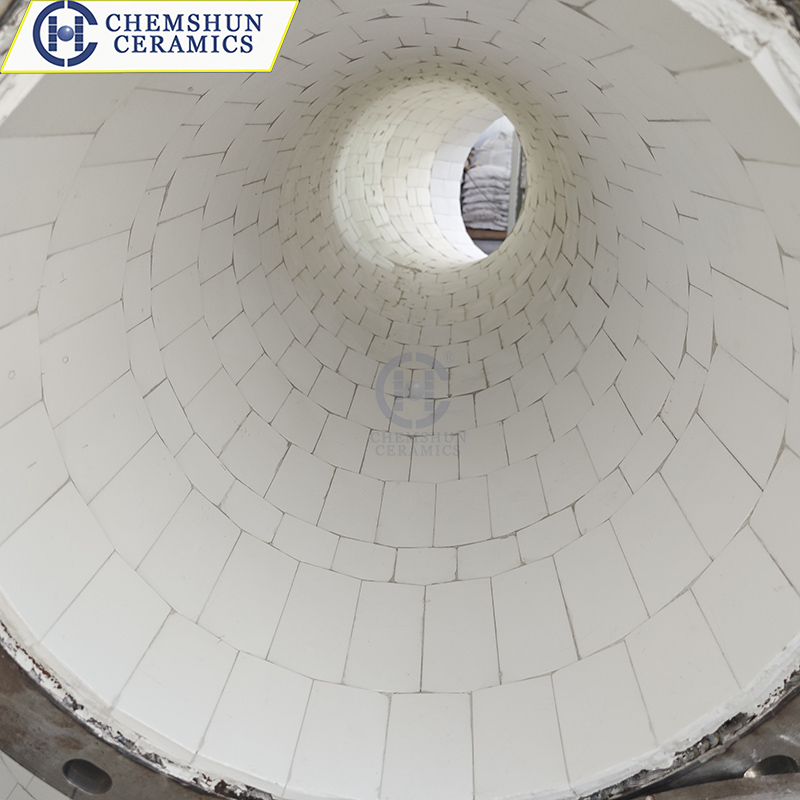
Many industrial and mining companies, when selecting alumina ceramic liners and ceramic composite plates, tend to treat hardness as the sole criterion and believe that the higher the hardness, the longer the service life. However, a large number of field cases show that many ceramic linings do not gradually wear thin; instead, they suffer corner chipping, delamination, and large-area detachment, and are taken out of service prematurely. The reason behind this is that many selection schemes overlook three hidden risks: impact conditions, interface compatibility, and thermal shock cycling.
Alumina ceramic is inherently brittle. It is suitable for particle erosion wear, but when subjected to continuous impact from large lumps of material and concentrated impact at material drop points, high-hardness ceramic alone is very likely to develop microcracks. Cracks propagate continuously along grain boundaries and eventually cause entire pieces to fracture and detach. This is also why mining chutes, steel raw material bins, and coarse crushing transfer points cannot directly adopt the ceramic solutions used for fine powder pipelines. To balance wear resistance and impact resistance, the design of ceramic composite structures is particularly critical. The transition adhesive layer between the ceramic tiles and the substrate, the buffer structure, and the size of individual ceramic tiles must all be redesigned based on impact energy.
Thermal shock failure is also easily overlooked. In power plant ash handling and high-temperature powder conveying applications, material temperatures fluctuate widely. The differences in thermal expansion coefficients among the ceramic, bonding layer, and steel plate generate internal stress under repeated hot-cold cycles, gradually causing debonding. In many projects, all ceramic indicators meet standards in preliminary testing, but tile detachment occurs after two or three months of operation. The root cause is insufficient design for thermal expansion matching.
The core logic of selection is not to pursue the highest purity or the highest hardness, but first to clarify the operating conditions: material particle size, flow rate, impact location, temperature range, and acid/alkali media, and then to match the corresponding formulation and composite structure. 95% alumina ceramic is the mainstay of wear resistance; through grain control and optimization of sintering aids, it achieves a balance between wear resistance and toughness. High-purity 99% alumina ceramic is more suitable for high-purity, contamination-free applications, rather than being blindly used at high-impact points.
A good wear-resistant alumina ceramic solution is a combination of material, structure, and installation process, not merely the replacement of a single ceramic plate. Pingxiang Chemshun Ceramics customizes ceramic composite plates and liner structures for different industrial and mining conditions, providing integrated support from formulation adjustment and structural design to on-site construction specifications, thereby reducing the risk of unplanned downtime and extending the full lifecycle of equipment.