
Top articles
- Alumina Ceramic Grinding Balls: Technical Properties and Applications of High-Purity Grinding Media
- Alumina Ceramic Wear Liners: Technical Selection and Application for Industrial Wear Protection
- Wear-Resistant Ceramic Tiles for Agitator Tank Protection
- High-Quality Alumina Ceramic Manufacturing Process: From Powder to Finished Product
- Design of Alumina Ceramic Liner Installation Structures and Key Technical Points for Failure Prevention
- Alumina Wear-Resistant Ceramics: The Hardcore Armor of Industry
- Impact Resistance of Ceramic Rubber Vulcanized Plates: An In-Depth Analysis
- What Is Alumina Ceramic and Why Is It the Preferred Wear-Resistant Material for Industry?
- Wear-Resistant Ceramic Tiles: Industrial Wear Protection Solution
- New Benchmark in Impact Resistance and Wear Protection:Three-in-One Ceramic Vulcanized Liners
Latest articles
- Alumina Ceramic Grinding Balls: Technical Properties and Applications of High-Purity Grinding Media
- Alumina Ceramic Wear Liners: Technical Selection and Application for Industrial Wear Protection
- Wear-Resistant Ceramic Tiles for Agitator Tank Protection
- High-Quality Alumina Ceramic Manufacturing Process: From Powder to Finished Product
- Design of Alumina Ceramic Liner Installation Structures and Key Technical Points for Failure Prevention
- Alumina Wear-Resistant Ceramics: The Hardcore Armor of Industry
- Impact Resistance of Ceramic Rubber Vulcanized Plates: An In-Depth Analysis
- What Is Alumina Ceramic and Why Is It the Preferred Wear-Resistant Material for Industry?
- Wear-Resistant Ceramic Tiles: Industrial Wear Protection Solution
- New Benchmark in Impact Resistance and Wear Protection:Three-in-One Ceramic Vulcanized Liners
Your browsing history

Alumina Ceramic Grinding Balls: Technical Properties and Applications of High-Purity Grinding Media
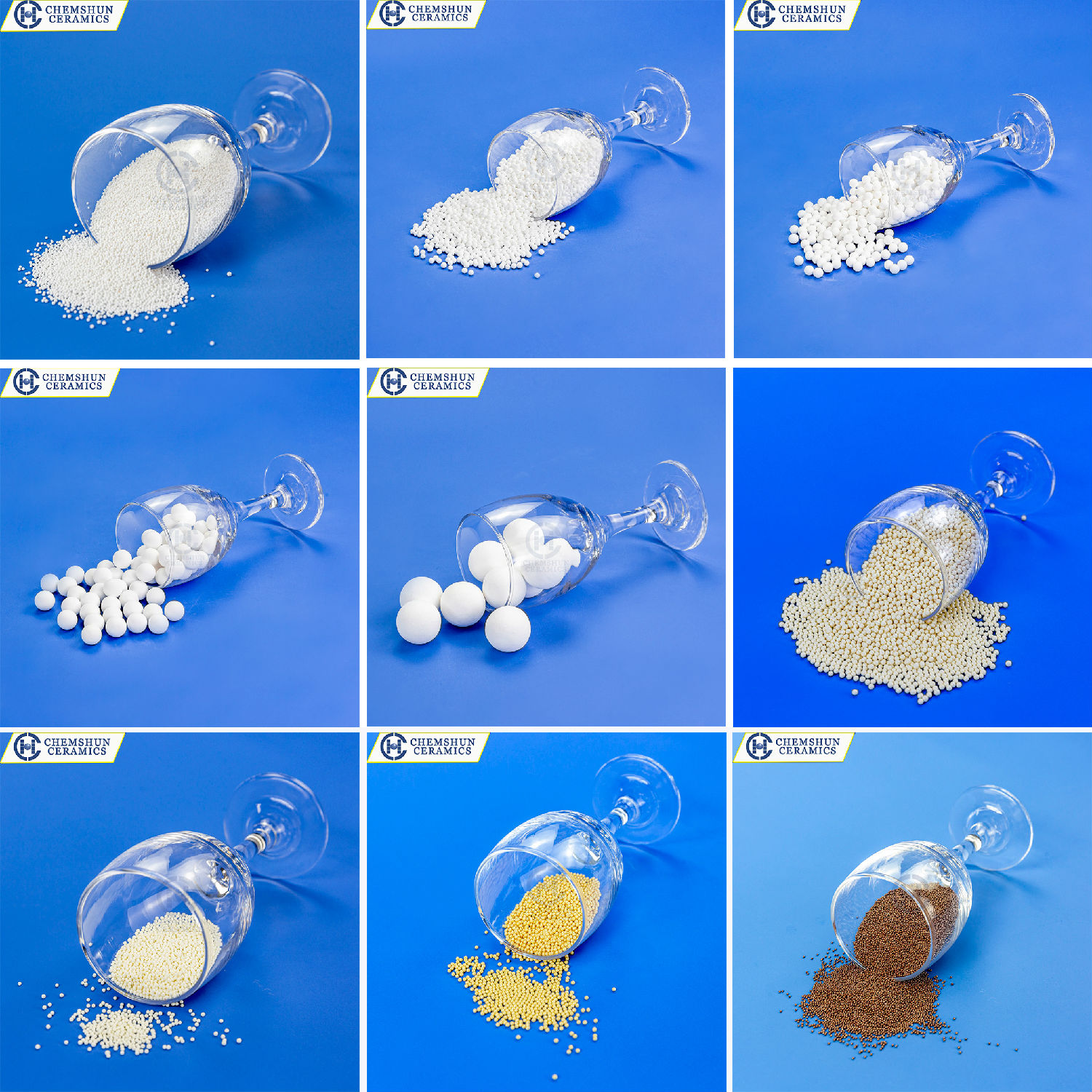
Alumina ceramic grinding balls are precision ceramic media composed primarily of Al2O3, with common purity grades including 92%, 95%, and 99%. Their core attributes are governed by alumina content: higher-purity grades deliver greater density and hardness while keeping silica and alkali impurities at low levels, thereby reducing contamination of the milled material from media wear. Typical density ranges from 3.60–3.65 g/cm³ for the 92% grade, with high-purity products exceeding 3.8 g/cm³. Owing to high hardness, compressive strength, and chemical inertness, alumina grinding balls are suitable for both wet and dry fine milling and remain structurally stable in acidic and alkaline environments.
Compared with steel balls, alumina grinding balls offer clear advantages in wear rate and energy consumption. In a comparative regrinding test on rough concentrate, alumina balls reduced media wear and energy consumption by approximately 82% and 58%, respectively, while increasing the fine-fraction content in the classification overflow, indicating that target fineness can be achieved with lower media consumption and power cost. Furthermore, the combination of high density and high sphericity promotes a uniform distribution of grinding forces, reducing ineffective impacts and over-grinding, and thereby maintaining consistent particle size distribution across batches. For purity-sensitive applications, wear debris from alumina media is chemically compatible with most milled materials and does not act as a foreign contaminant.
Alumina ceramic grinding balls are applied in architectural ceramics, technical ceramics, glazes, coatings, pigments, lithium-ion cathode materials, and mineral processing. Media selection should account for feed hardness, target particle size, mill type (ball mill, stirred mill, vibratory mill), and contamination tolerance: the 92% grade suits most conventional ceramic and mineral fine grinding and is the most widely used industrial grade, while 95% and higher grades are specified for technical ceramics, electronic materials, and battery precursors where stricter control of introduced impurities is required. In ball mills or stirred mills, ball size distribution and filling ratio directly affect comminution efficiency and media loss, and should be matched to the feed size and product fineness specification.